


About This Recipe
Iced oatmeal cookies are pure nostalgia: soft, chewy, and full of toasty oats and warm spice, topped with a thin vanilla glaze that cracks just a little when you bite into it.
This version is:
- Soft and chewy in the center, lightly crisp at the edges
- Made with pulsed oats for that classic bakery-style texture
- Finished with a simple powdered sugar icing
- Perfect for fall and winter baking, holiday cookie trays, and coffee breaks
They taste like a homemade upgrade of the classic store-bought iced oatmeal cookies—only much fresher and more flavorful.
Ingredients: What You’ll Need
Makes about 28–32 cookies
For the Oatmeal Cookies
- 2 cups (200 g) old-fashioned rolled oats
- 1½ cups (190 g) all-purpose flour, spooned and leveled
- 1 tsp baking soda
- 1 tsp ground cinnamon
- ¼ tsp ground nutmeg (optional, but wonderful)
- ½ tsp fine sea salt
- ¾ cup (170 g) unsalted butter, softened
- 1 cup (200 g) packed light or dark brown sugar
- ½ cup (100 g) granulated sugar
- 2 large eggs, room temperature
- 2 tsp vanilla extract
For the Vanilla Icing
- 2 cups (240 g) powdered sugar, sifted
- 3–4 Tbsp milk (more as needed)
- ½ tsp vanilla extract
- Pinch of fine sea salt
Instructions: Step-by-Step Preparation
1. Prep the Oats
- Place rolled oats in a food processor.
- Pulse 8–12 times until the oats are broken down but not fully ground—think coarse pieces, not flour.
- This helps create that classic, nubby iced oatmeal cookie texture.
2. Mix the Dry Ingredients
- In a medium bowl, whisk together:
- Pulsed oats
- Flour
- Baking soda
- Cinnamon
- Nutmeg (if using)
- Salt
- Set aside.
3. Cream Butter & Sugars
- In a large bowl, beat softened butter, brown sugar, and granulated sugar together until light and creamy (about 2–3 minutes).
- Scrape down sides of the bowl as needed.
4. Add Eggs & Vanilla
- Beat in eggs one at a time until fully combined.
- Mix in vanilla extract until smooth.
5. Combine Wet & Dry
- Add dry ingredients to the butter mixture.
- Mix on low or stir with a spatula just until combined—don’t overmix.
- Dough will be thick and slightly sticky.
6. Chill the Dough
- Cover the bowl and chill the dough in the refrigerator for 45–60 minutes.
- This helps cookies hold their shape and bake up chewy, not flat.
7. Preheat Oven & Prep Pans
- Toward the end of chilling, preheat the oven to 175°C.
- Line 2 baking sheets with parchment paper.
8. Shape & Bake the Cookies
- Scoop about 1½ Tbsp dough per cookie (a medium cookie scoop works well).
- Roll lightly into balls and place on prepared baking sheets, spacing about 5 cm apart.
- Bake at 175°C for 10–13 minutes, until:
- Edges are set and lightly golden
- Centers still look slightly underbaked and soft
- Let cookies cool on the baking sheet for 5 minutes, then transfer to a wire rack to cool completely.
Make the Vanilla Icing
- In a medium bowl, whisk together:
- Powdered sugar
- 3 Tbsp milk
- Vanilla
- Salt
- Check consistency:
- You want a thick but pourable icing that slowly runs off the spoon and smooths out within 5–10 seconds.
- If too thick, whisk in more milk ½ tsp at a time.
- If too thin, add a bit more powdered sugar.
Ice the Oatmeal Cookies
- Once cookies are completely cool, dip just the tops into the icing, letting excess drip off back into the bowl.
- Turn upright and place on a cooling rack (with parchment underneath to catch drips).
- Let icing set at room temperature for at least 30–60 minutes, until dry to the touch.
How to Store It
- Room Temperature:
- Store in an airtight container in a single layer, or with parchment between layers, for 4–5 days.
- Freezer (Iced Cookies):
- Freeze in a single layer until firm, then stack with parchment between layers in a container for up to 2 months.
- Thaw at room temperature; icing may get slightly softer, but still tastes great.
Smart Ingredient Swaps
- Gluten-Free Version:
- Use a 1:1 gluten-free baking flour blend and certified gluten-free oats.
- Less Sweet Icing:
- Make a thinner drizzle by using more milk and less powdered sugar, or drizzle instead of dipping.
- Spice it Up:
- Add a pinch of cloves or allspice for a more gingerbread-like flavor.
- Brown Butter Variant:
- Brown the butter first (then cool) for a nutty, deeper flavor.
How to Serve It
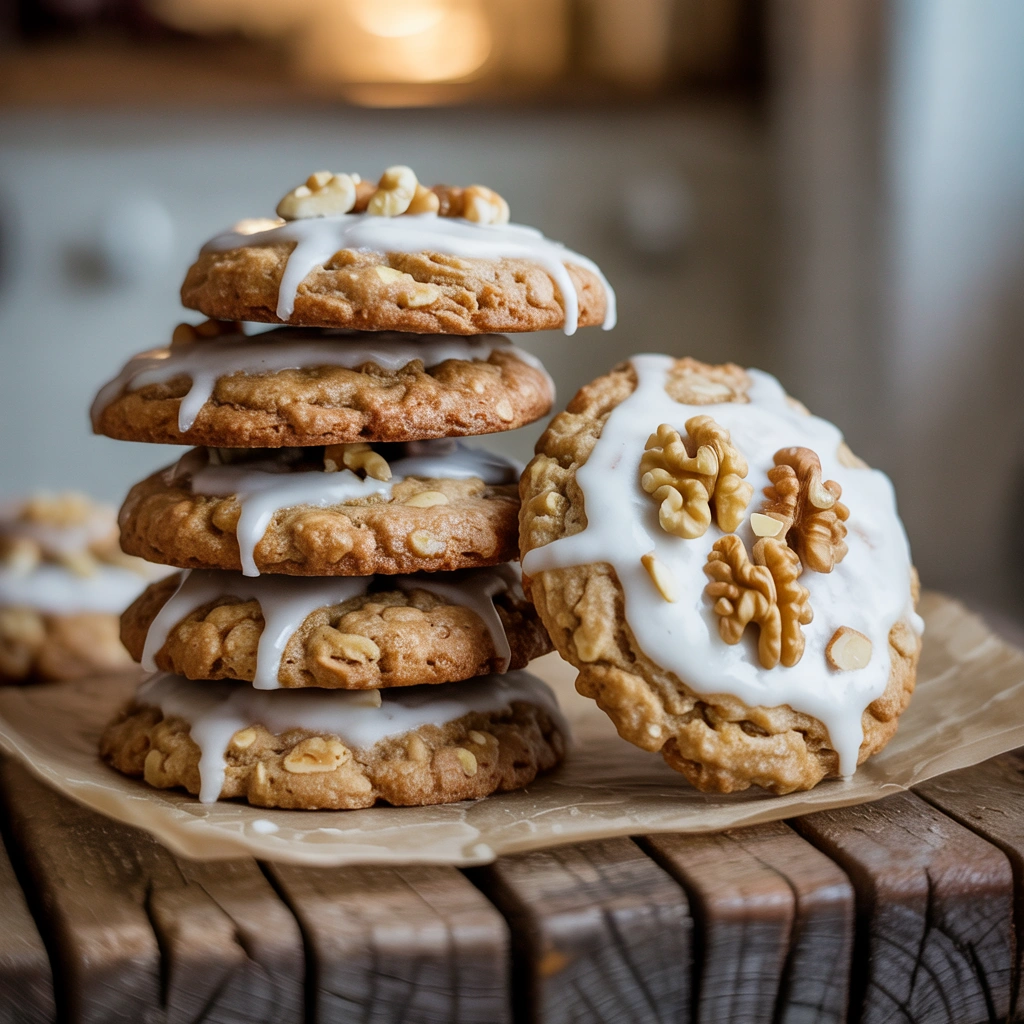
Serve iced oatmeal cookies:
- With a mug of tea, coffee, cider, or hot chocolate
- On holiday cookie platters with sugar cookies, molasses cookies, and chocolate crinkles
- As an afternoon snack with a glass of milk
They’re also lovely:
- As a small dessert after dinner
- Wrapped up in clear bags or boxes as edible gifts
Cultural Background & Personal Touches
Iced oatmeal cookies are a nostalgic treat for many—reminiscent of the store-bought versions found in lunchboxes and pantries. This homemade version:
- Keeps the crackly white icing
- Uses real butter, oats, and warm spices
- Delivers a softer, chewier cookie than the crunchy commercial ones
Personal touches that make this recipe stand out:
- Pulsing oats for the just-right texture
- A generous but not overpowering dose of cinnamon and a little nutmeg
- A thick, opaque icing that dries with that classic old-fashioned look
Seasonal Variations
- Holiday Iced Oatmeal Cookies:
- Add a pinch of cloves and allspice; use a light maple extract in the icing.
- Maple Iced Oatmeal:
- Replace part of the milk in the icing with pure maple syrup (for non-sugar-restricted diets).
- Cranberry Oatmeal Iced Cookies:
- Fold ½ cup dried cranberries into the dough (reduce raisins elsewhere or omit to keep balance).
Frequently Asked Questions
Why are my iced oatmeal cookies dry?
- Most common cause: overbaking.
- Pull them when the edges are just golden, and centers still look a bit soft—they firm as they cool.
Can I use quick oats instead of rolled oats?
- Rolled oats are best. Quick oats will work, but give a slightly different, less hearty texture and spread more.
Do I have to pulse the oats?
- It’s optional but recommended. Pulsing gives the classic iced oatmeal cookie look and a more tender bite.
Can I make the dough ahead of time?
- Yes. Chill dough for up to 48 hours; let it sit at room temperature for 10–15 minutes if very firm, then scoop and bake.

Iced Oatmeal Cookies (Soft, Chewy & Old-Fashioned)
Description
Soft, chewy iced oatmeal cookies made with pulsed rolled oats, warm cinnamon, and a classic vanilla icing. These old-fashioned cookies have that nostalgic crackly glaze and are perfect for holiday trays, coffee breaks, and cozy afternoons.
Ingredients
Instructions
- Pulse oats in a food processor 8–12 times until coarsely chopped.
- In a bowl, whisk pulsed oats, flour, baking soda, salt, cinnamon, and nutmeg.
- In a large bowl, beat butter, brown sugar, and granulated sugar until light and creamy (2–3 minutes).
- Beat in eggs one at a time, then add vanilla and mix until smooth.
- Add dry ingredients to wet and mix just until combined. Cover and chill the dough 45–60 minutes.
- Preheat oven to 175°C. Line baking sheets with parchment.
- Scoop about 1½ Tbsp of dough, roll into balls, and place 5 cm apart.
- Bake 10–13 minutes, until edges are set and lightly golden and centers are still soft. Cool on the sheet for 5 minutes, then transfer to a rack to cool completely.
- For icing, whisk powdered sugar, 3 Tbsp milk, vanilla, and salt until smooth and thick but pourable. Adjust consistency with more milk or sugar if needed.
- Dip the tops of cooled cookies into icing, let excess drip off, and place on a rack to set. Allow icing to dry before storing.
Notes
- Don’t skip chilling the dough—this helps control spread and improves texture.
For a stronger spice profile, add a pinch of cloves or allspice.
Iced cookies freeze well once the icing is fully set; thaw at room temperature.
Quick oats may be used in a pinch, but rolled oats (pulsed) produce the best classic texture.